The Hidden Problem on Automotive Production Lines
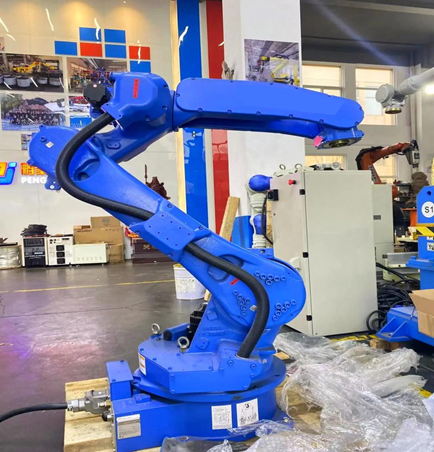
In modern automotive assembly and welding lines, robots aren’t “broken”—yet they occasionally misposition parts, weld spots slightly off, or grip vacuum cups inconsistently. Often, these errors vanish after a restart, leaving engineers puzzled.
From the user perspective, the root causes are rarely the robots themselves, but instead:
Unstable I/O refresh cycles
Signal jitter or lost pulses under high interference
Inconsistent PROFINET RT responses from conventional I/O
The risk is invisible: the PLC shows no alarms, yet robots slow down silently, reducing productivity and potentially compromising quality.
The Challenges
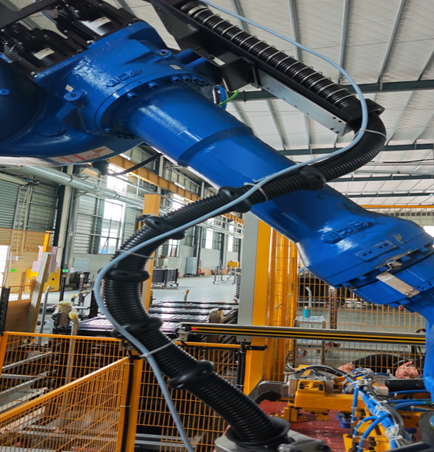
Electromagnetic interference in harsh environments
High-power servo drives, welding equipment, and long sensor cables make ordinary I/O unreliable. Edge signals get lost, and cycle-dependent operations lag.
Faster takt times exceeding I/O limits
Automotive lines demand higher-speed, synchronized motion. Traditional PROFINET I/O with ≥4 ms cycles becomes a bottleneck, causing robots to “wait for signals”, no matter how precise the S7 1500 calculations are.
High downtime costs
Every minute of line stoppage is extremely expensive. Unstable connections, module dropouts, or loose terminals can trigger unplanned downtime—enough to make engineers abandon a brand entirely.
The ODOT Solution
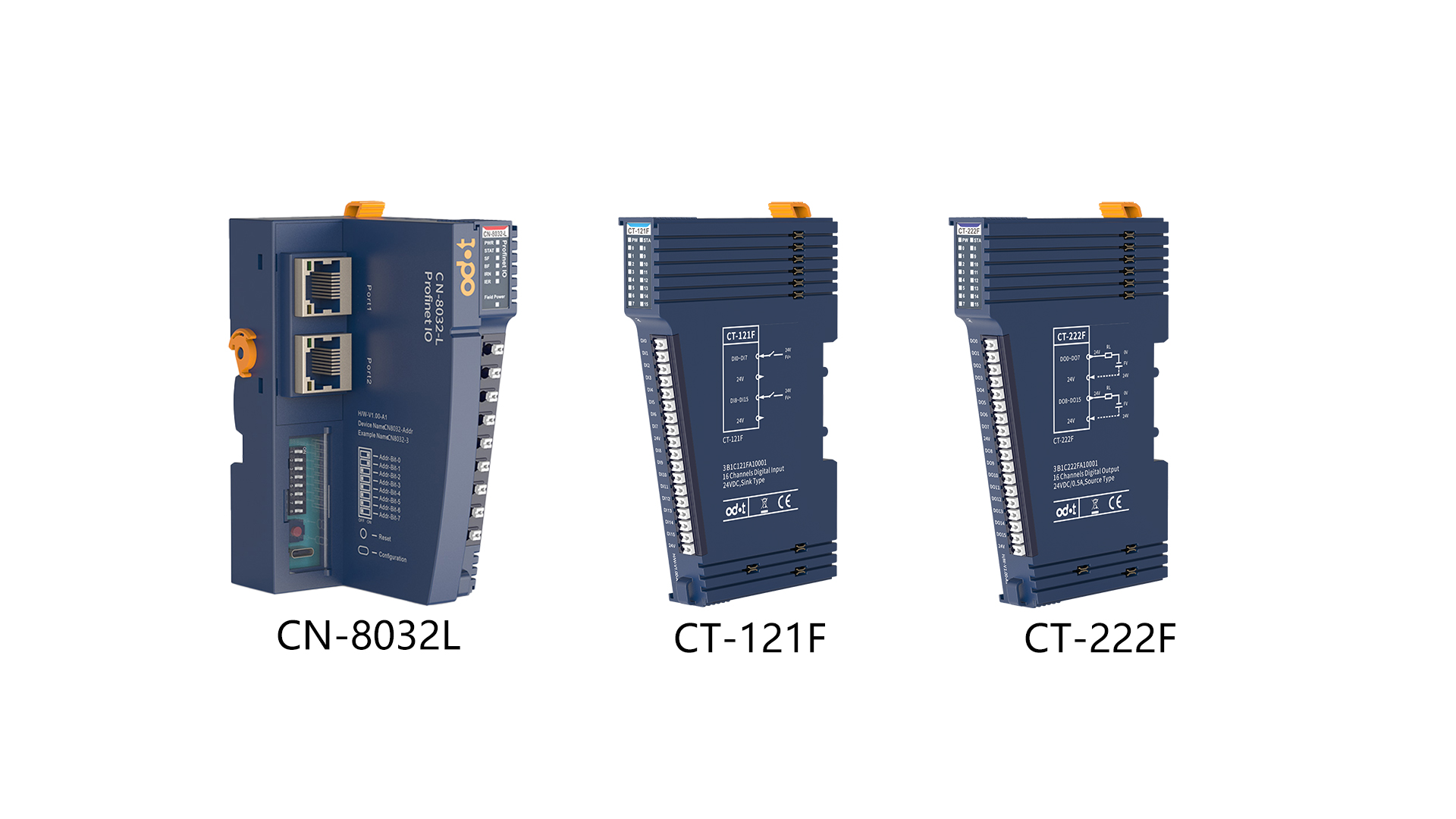
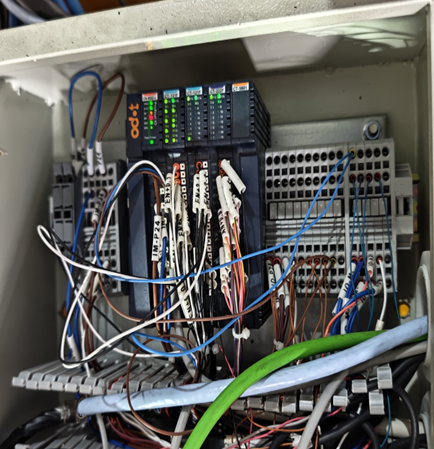
By integrating ODOT CN-8032-L PROFINET couplers with the Siemens S7 1500 PLC, the production line achieved:
1 ms deterministic RT communication – ensuring robots respond reliably at high speed
Stable, interference-resistant signal acquisition – even in heavy welding and servo environments
Loss-free, real-time I/O updates – supporting up to 32 expansion modules and 1440 bytes of data
Module roles:
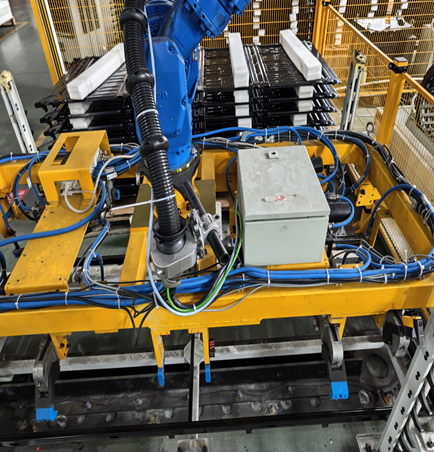
CT-121F digital inputs capture limit sensors and safety signals with high accuracy
CT-222F digital outputs precisely control solenoids and vacuum actuators, preventing misgrips
The Results
Random robot mispositioning eliminated
Stable production at high takt times
Reduced troubleshooting and downtime
Consistent accuracy and reliability, no longer limited by I/O
Key Takeaways
“Robot accuracy is often limited by I/O, not by the robot.”
“No alarms doesn’t mean no problems — unstable I/O silently reduces productivity.”
“1 ms deterministic I/O makes the difference in high-speed automotive lines.”
✅ Why S7 1500 users choose ODOT:
Even with a high-performance S7 1500 PLC, robots can be slowed down by the I/O layer. ODOT ensures that the PLC’s precision fully translates to the field, eliminating hidden bottlenecks and safeguarding production efficiency.